

Prison & Correctional Security

How can a prison inspect vehicles entering a facility without unloading them?
Prison Vehicle Screening Solutions
Securing the Perimeter: Preventing Hidden Escapes and Intrusions by Vehicle
Modern prison security isn’t just about keeping people in — it’s also about keeping the wrong people out. One of the most critical vulnerabilities correctional facilities face today is the risk of inmates escaping or outsiders infiltrating by concealing themselves inside vehicles entering or exiting the premises.
Every delivery truck, service vehicle, and staff car that crosses the prison perimeter is a potential threat if not properly screened. Without advanced prison vehicle screening solutions, these moving blind spots can be exploited to smuggle contraband, facilitate escapes, or enable unauthorized access — jeopardizing the safety of staff, inmates, and the surrounding community.
By sensing heartbeat vibrations, systems such as the Heartbeat Detector® can identify live individuals even when concealed, motionless, or hidden within confined spaces—making it a powerful solution for security, inspection, and prison vehicle screening applications.
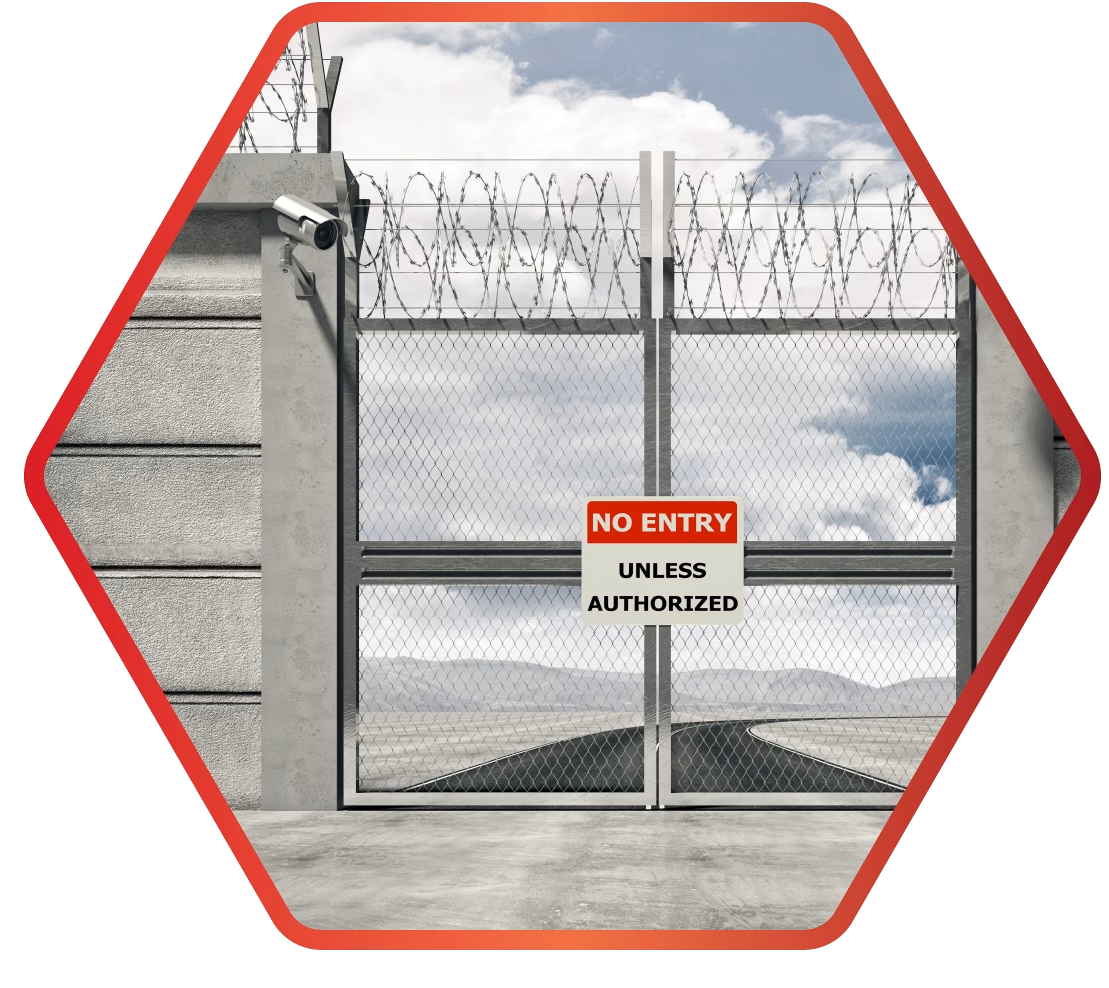
Proven Success in Global Prison Security
For more than 25 years, the technology offered by Geospace has been used to detect hidden people coming and going from security facilities.
Effective Prison Vehicle Security Screening Solutions
Our solutions are trusted in numerous applications across the globe, including:

vehicle screening
Geospace technology uses proven analytics to detect hidden compartments with concealed individuals. This simple, fast, and trusted technology is used in more 25 countries around the world for corrections security.

realtime monitoring
Whether embedded into our robust and ruggedized land and marine nodal products or offered independently, our wide offering of geophones are used in gathering data on the subsurface.

Layered protection
Geospace sensors are vital components of data gathering tools in applications for perimeter surveillance purposes. Our sensors are packaged into various solutions which tie into command and control, VMS, access control and other tools for comprehesive layered protection.
Articles, News & Insights
How to Choose the Right Contract Manufacturing Partner for High-Reliability Electronics
The Right Manufacturing Partner Does More Than Build Your Product For many OEMs, selecting a...
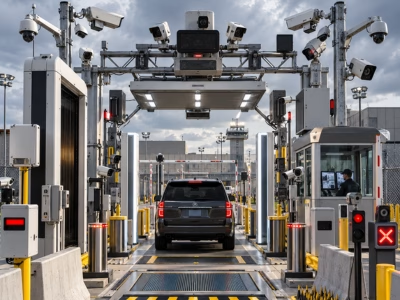
Building a Layered Vehicle Inspection Strategy Without Overbuilding the Checkpoint
Building a Layered Vehicle Inspection Strategy Without Overbuilding the Checkpoint Vehicle...

Vehicle Inspection System Cost
Does Every Security Upgrade Need to Be a Capital Project? Improving vehicle security can quickly...
Frequently Asked Questions
How Do Prisons Detect Hidden People in Vehicles?
The Geospace Heartbeat Detector helps teams quickly and efficiently identify concealed individuals—supporting safer inspections at prison gates and informed decision-making in high-pressure environments. Using a lightweight, portable technology such as the Heartbeat Detector helps reduce the time each vehicle scan takes. Most scenarios the scan itself takes less than 60 seconds and identifies the seismic signal associated with the human heartbeat.
How long does a scan take to detect a hidden human?
In most scenarios, the Heartbeat Detector scan takes less than 60 seconds once the sensors have been placed on the vehicle. Typically, a two-person operation completes a vehicle scan faster than a K9 search.
How Can Correctional Facilities Prevent Vehicle-Assisted Escapes?
Errors can occur with traditional physical screening, especially when staff or K9 units are overburdened. By adding scanning technologies such as the Heartbeat Detector to support layered security at a correctional facility, security teams help prevent escapes. Lengthy unloading of vehicles or manual searches are replaced by speedy technology with a proven 99% success rate.
What if a person is well-hidden and relaxed inside a vehicle?
Regardless of how well-hidden a person may be, their heart still beats. The technology used to identify the human heartbeat signal was developed by the U.S. Federal Laboratory in Oak Ridge, Tennessee. The Heartbeat Detector has found hidden humans in every part of a vehicle, including wrapped in bubble wrap, fabric, and cooling towels. This makes Heartbeat Detector one of the most reliable ways to prevent prison escapes.