

Pioneer Seismic Data Recorder


PRODUCT DETAILS
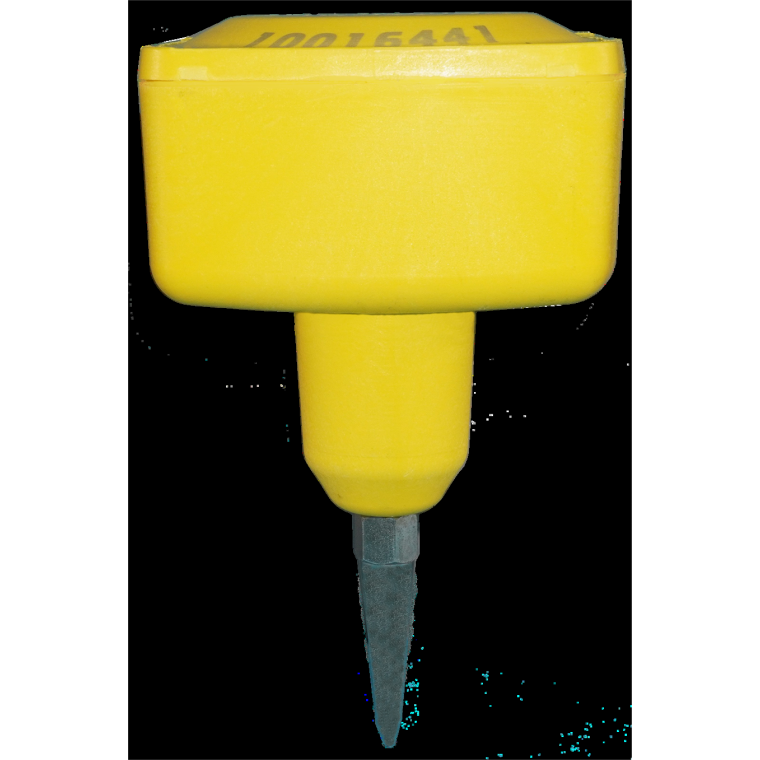
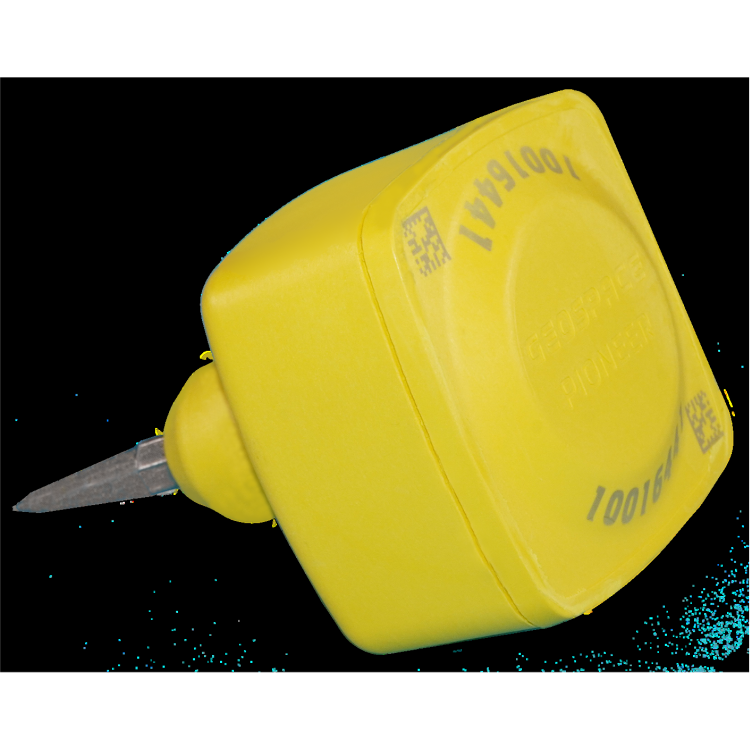
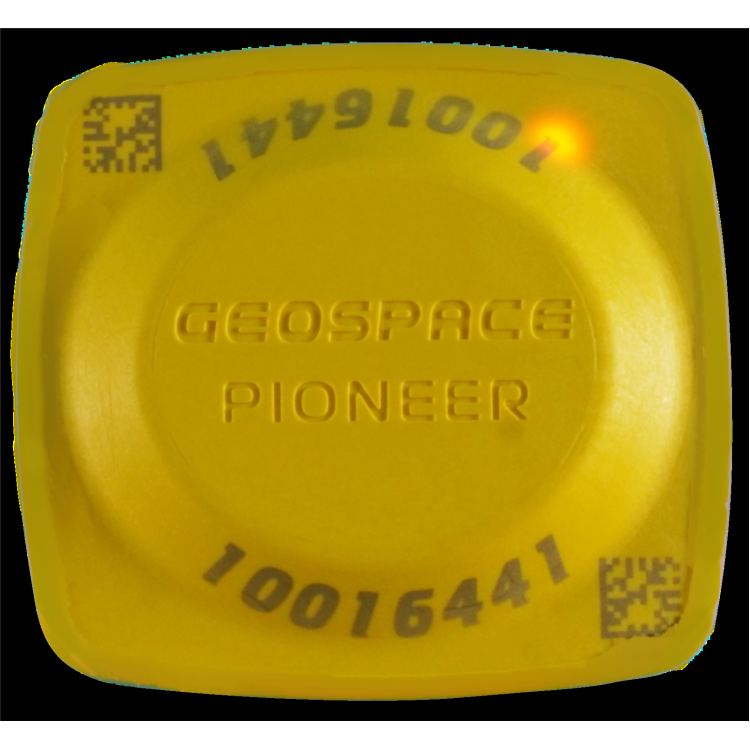
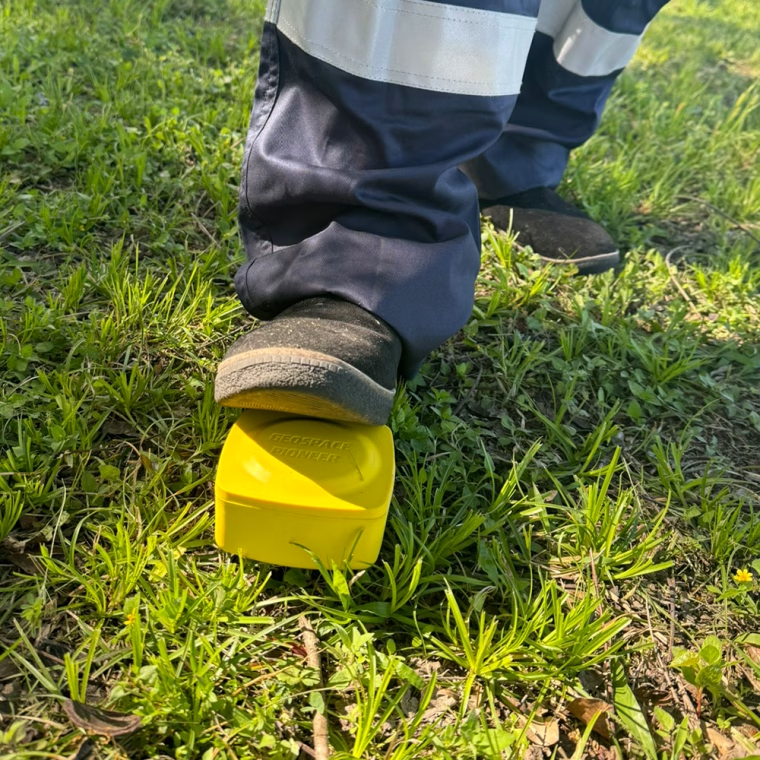
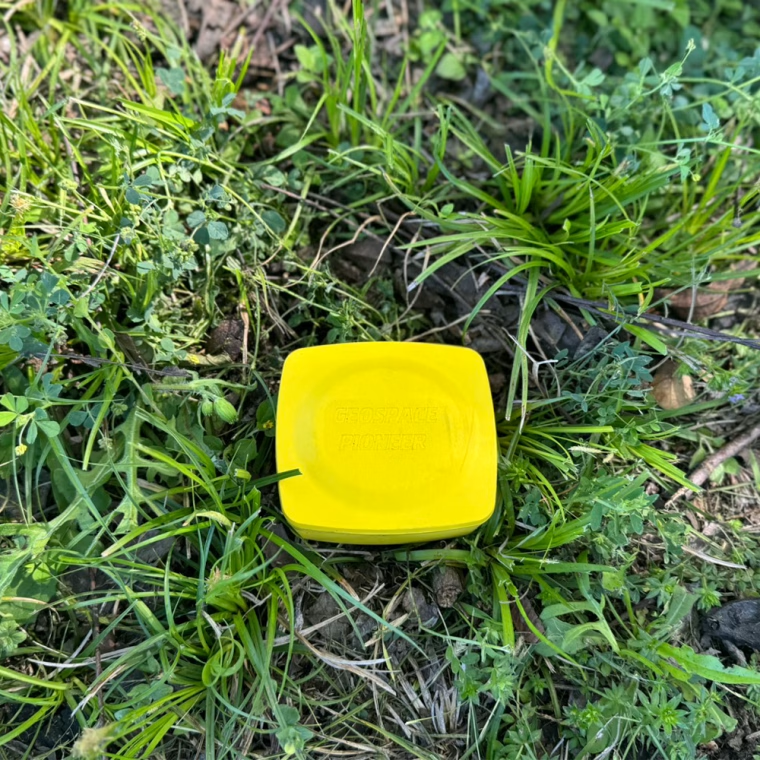
The Pioneer™ is a small, lightweight, single-component, autonomous land wireless seismic data acquisition solution. One GS-5 vertical internal geophone (5 Hz), battery, 24-bit digitizer, and GPS receiver are enclosed in its sealed case. Faster and more efficient operations can be achieved with the use of the Pioneer by eliminating the process of engaging connectors for power and data transfer.
Features
- No connectors
- Less than 0.5 kg/1 lb.
- Wireless data download and charging
- Continuous cable-free autonomous recording
- 24-bit resolution and 122 dB instantaneous dynamic range
- GS-5 vertical geophone (5Hz)
- Battery life: 50 days @ 24 hrs/day operation
- Solid-state flash memory: 16 or 32 GB
Mechanical Specifications
|
Length X Width
|
8.8 x 8.2 cm
|
3.48 x 3.23 in.
|
|
Height (Without Spike)
|
9.4 cm
|
3.7 in.
|
|
Weight
|
.45 kg
|
1.0 lb.
|
|
Operating Temperature Range
|
–40°C to +60°C
|
–40°F to +140°F
|
Electrical Specifications
|
Digitized Recording Station
|
1 Channel, 24-bit A/D Digitizer GS-5 (5 Hz) Vertical Geophone
|
|
Digitization
|
24-bit Delta-Sigma
|
|
Sample Interval
|
0.5, 1, 2, 4 ms
|
|
Pre-amplifier Gains
|
0, 6, 12, 18, 24, 30, 36dB
|
|
Maximum Input Signal
|
1.77 Vrms
|
|
Equivalent Input Noise (@2ms sample interval)
|
0.28 μVrms
|
|
Gain Accuracy
|
Better than 1%
|
|
Anti-alias Filter
|
83% Nyquist
|
|
Instantaneous Dynamic Range
|
122 dB @ 2 ms sample interval
|
|
THD (Geophone)
|
< 0.1%
|
|
Flash Memory
|
16 or 32 GB per channel
|
|
Frequency Response
|
1 Hz – 830 Hz @ 1/2 ms sample interval
|
|
Battery Module
|
50 days operation
|
|
GS-5 Geophone Sensitivity
|
2.1 V/in/sec +/- 5%
|
|
Frequency
|
5 Hz
|
Resources

Frequently Asked Questions on Seismic Land Nodes (FAQ)
What is a seismic land node?
Pioneer is a single-channel, wireless land seismic node designed to simplify large-scale seismic acquisition. By combining all critical components into one compact unit, it reduces equipment complexity while delivering high-resolution seismic data
How do wireless seismic land nodes work?
Wireless seismic nodes are deployed across a survey area where they continuously record seismic data independently. Each node uses GPS to maintain precise timing and stores data internally throughout the survey. Once recording is complete, the data is downloaded for processing and interpretation.
Pioneer further simplifies field operations by using wireless data transfer and inductive charging, eliminating the need for field crews to connect power or download cables to every node. This reduces handling time while improving deployment efficiency.
What are the advantages of wireless nodal acquisition?
Wireless nodal acquisition offers several operational advantages over traditional cabled systems:
- Faster deployment and retrieval
- Reduced equipment handling
- Elimination of long field cables
- Greater flexibility around terrain and infrastructure
- Easy scalability for very large channel-count surveys
- Continuous autonomous recording
Because each Pioneer node operates independently, survey layouts can be designed around project objectives rather than cable limitations, making nodal systems well suited for both conventional exploration and emerging applications such as carbon capture and storage (CCUS).
How much does a wireless seismic node weigh?
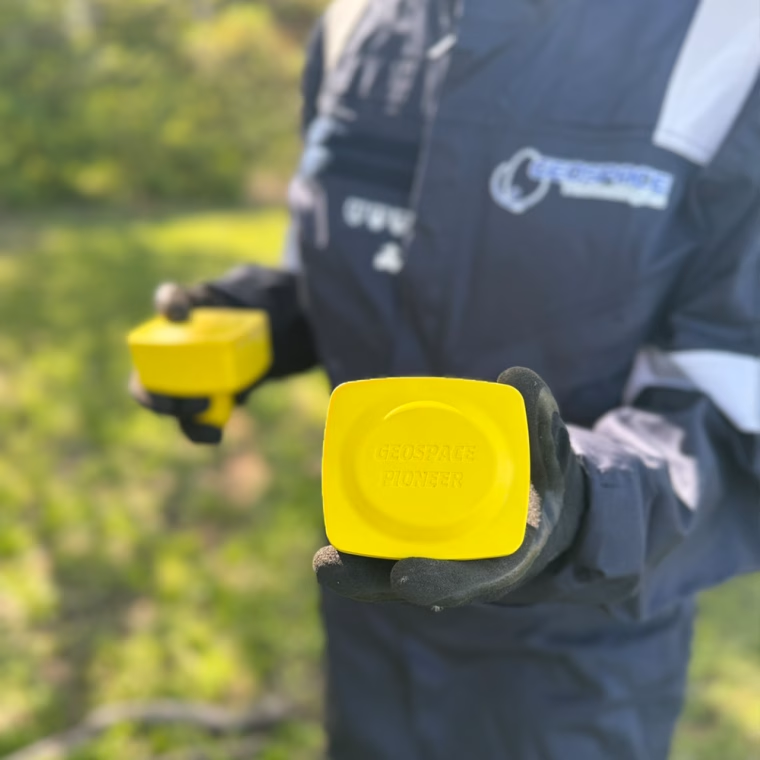
Pioneer weighs less than 0.5 kg (1 lb.), making it one of the lightest geophone-based land seismic nodes available.
Its compact size and low weight reduce the physical burden on field crews while allowing more equipment to be transported and deployed with each trip into the field.
Why is lightweight seismic equipment in seismic surveys?
Large land seismic surveys may require crews to deploy thousands—or even hundreds of thousands—of recording nodes. Reducing the weight of every individual node can significantly improve operational efficiency.
Lighter equipment means crews can carry more nodes per trip, reduce physical fatigue, accelerate deployment and retrieval, and improve overall survey productivity. Smaller, lighter equipment can also reduce transportation requirements and lower operating costs.
Pioneer was specifically engineered to provide these efficiency gains without compromising data quality.
How long does a Pioneer land node record data?
Pioneer is designed for extended autonomous operation, with a battery capable of supporting up to 50 days of continuous recording while operating 24 hours per day.
Its onboard solid-state memory and low-power design allow crews to complete long-duration surveys with fewer interruptions for battery replacement or servicing.
