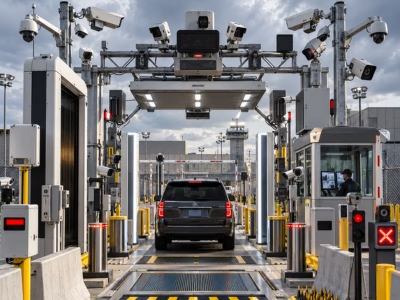
Correctional facilities have always depended on secure perimeter controls, disciplined operational procedures, and thorough inspections to prevent escapes and the introduction of contraband. While those principles have not changed, the operational environment surrounding correctional security has.
Today’s correctional leaders face increasing staffing shortages, evolving contraband threats, and growing operational demands. These pressures make it more difficult to maintain consistent inspection procedures, particularly at vehicle access points where employees, contractors, service providers, and delivery vehicles enter and exit secure facilities each day.
Vehicle security inspections have always been important. Today, they have become even more critical.
Correctional Security Is Becoming More Complex
The National Institute of Justice (NIJ), working with correctional administrators and researchers through a RAND-led initiative, identified understaffing, contraband, illicit drugs, contraband cell phones, and gang activity as the highest-priority security concerns facing correctional institutions. More than 90 percent of participating experts rated insufficient staffing as a high-priority threat, noting that inadequate staffing reduces an institution’s ability to deter, prevent, and respond to security incidents.
These challenges rarely exist in isolation.
As staffing resources become more limited, officers are expected to perform more responsibilities while maintaining the same level of vigilance. Every vehicle entering or leaving a secure facility requires time, attention, and consistent security inspection procedures, even as operational demands continue to increase.
Every Vehicle Represents an Opportunity
Vehicle traffic is an essential part of correctional operations. Staff vehicles arrive for shift changes. Contractors perform maintenance. Food deliveries, medical suppliers, laundry services, waste removal, and construction vehicles routinely enter secure grounds. Each legitimate vehicle also represents a potential pathway for unauthorized persons or prohibited items.
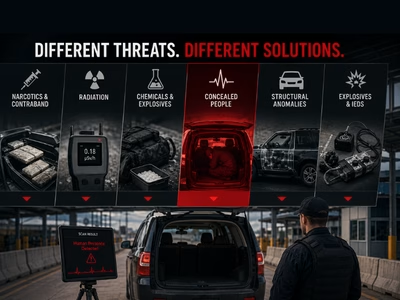
Research sponsored by the NIJ found that correctional agencies employ multiple interdiction strategies because no single security measure can address every risk. Researchers concluded that effective contraband prevention requires a robust, layered approach tailored to each facility’s operational environment.
Vehicle security inspections are an important component of that layered strategy.
Consistency Can Be Difficult to Maintain
Thorough vehicle security inspections require trained personnel, established procedures, and sufficient time. However, correctional facilities often operate under conditions that challenge consistency. Shift changes create traffic peaks. Emergency vehicle movements require immediate access. Commercial deliveries follow demanding schedules. Weather conditions can complicate inspections. Limited staffing may require officers to balance inspection duties with other security responsibilities.
None of these challenges reduce the importance of inspections. Instead, they increase the need for inspection methods that help officers work efficiently while maintaining security standards.
Technology Supports, Not Replaces, Good Procedures
Technology cannot replace experienced correctional officers or established inspection protocols. It can, however, help agencies strengthen existing security procedures.
Modern security inspection technologies can assist officers by providing additional information during vehicle screening, helping facilities maintain effective inspection processes while reducing operational burden. When integrated into existing checkpoint procedures, these technologies, such as Heartbeat Detector, become another layer of security rather than a replacement for established practices. Using technologies that accelerate accurate screening adds significant value to the overall operational readiness of a security team.
As correctional security challenges continue to evolve, agencies are increasingly evaluating technologies that improve operational efficiency while supporting consistent inspection practices.
Looking Ahead
The challenges facing correctional facilities are unlikely to diminish. Staffing shortages, evolving contraband threats, and increasing operational complexity continue to reshape how correctional agencies think about institutional security.
Vehicle security inspections remain one of the most important opportunities to identify potential threats before they enter or leave a secure facility. Investing in effective inspection procedures, supported by appropriate technology and well-trained personnel, helps correctional agencies strengthen one of the most critical layers in their overall security strategy.
Resources to Learn More
- National Institute of Justice: Experts Identify Priority Needs for Addressing Correctional Agency Security Threats
- NIJ Research: Contraband and Interdiction Strategies in Correctional Facilities
- NIJ Technical Report: Contraband and Interdiction Modalities Used in Correctional Facilities (2024)
- RAND Report: Countering Threats to Correctional Institution Security