

Port Security
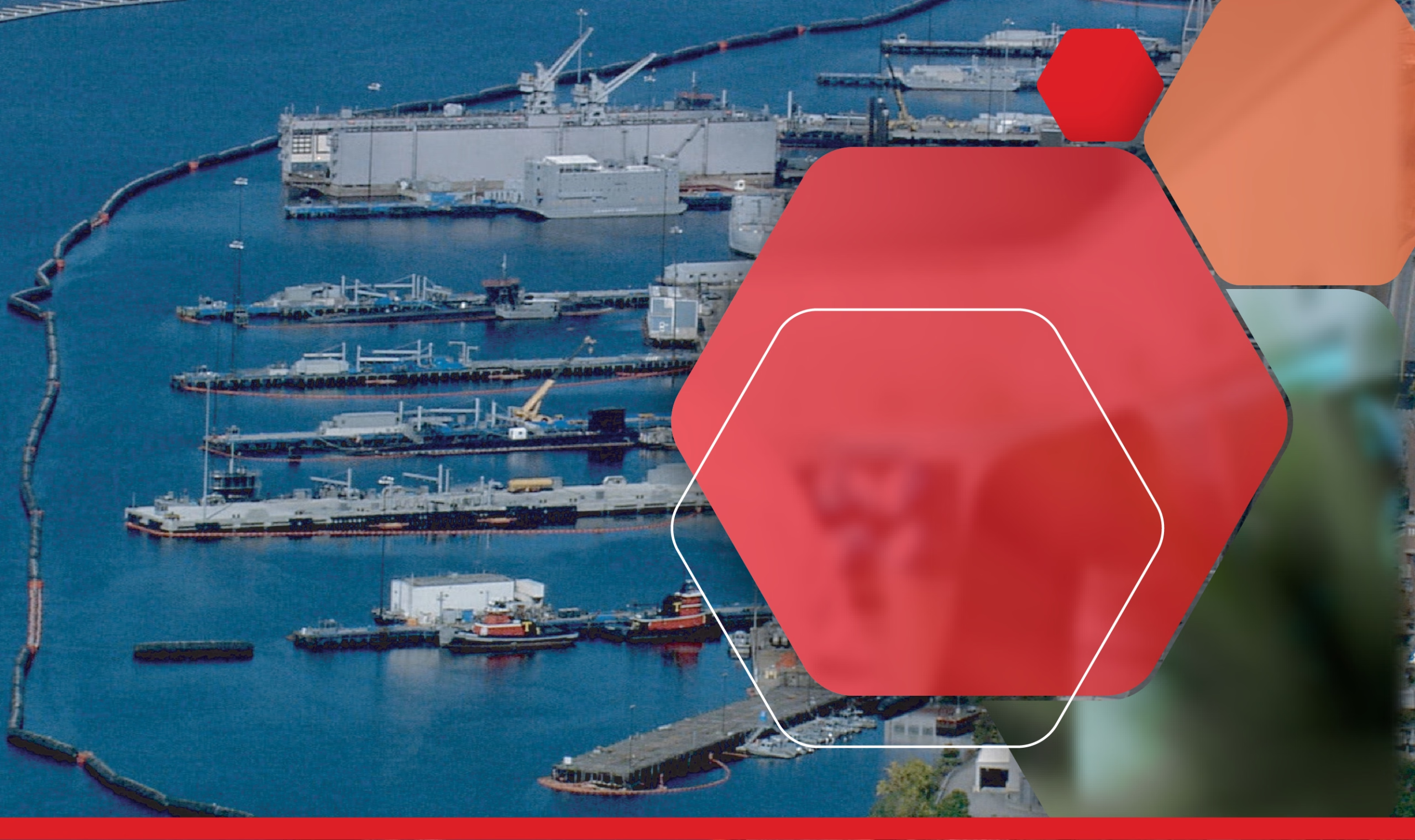
Applying a Risk-based Approach to Port Safety & Security
Ports need to keep cargo moving while protecting people, vessels and critical infrastructure. At the same time, security personnel are tasked with applying standard, repeatable procedures for terminal safety and security.
The International Maritime Organization emphasizes a risk-based approach to ship and port facility security, with measures suited to each facility’s operating environment. Additionally, port security planning needs to consider access from both land and water, a vulnerability highlighted by the U.S. Government Accountability Office’s assessment of maritime security.
Geospace Technologies helps security teams reveal activity that can be difficult to see, adding information to support inspections and response across port environments. Geospace supports this risk-based approach with sensing capabilities that help security teams identify concealed human presence in vehicles and extend awareness below the waterline.
Vehicle screening
Heartbeat Detector® helps security personnel identify concealed human presence in trucks and other vehicles. At container terminals, screening can take place at a checkpoint while the container remains on a truck chassis, before the vehicle continues into the terminal. Local scanning operates without an internet connection, giving operators flexibility when adding concealed-person detection to existing inspection procedures.
The International Maritime Organization (IMO) identifies “stowaways” or people concealed in containers and cargo spaces as a concern that can endanger lives and disrupt shipping operations. Heartbeat Detector® helps security personnel identify concealed human presence in trucks and other vehicles. At container terminals, screening can take place at a checkpoint while the container remains on a truck chassis, before the vehicle continues into the terminal. Local scanning operates without an internet connection, providing flexibility within existing inspection procedures.

Underwater Monitoring
Protecting a port also requires awareness beneath the surface, where visibility and conventional surveillance can be limited. A European Commission Joint Research Centre analysis identifies swimmers, divers and small submersibles among the waterside entry concerns that port security planning should address.
Geospace’s passive sensing capabilities support the detection of underwater activity associated with divers, small vessels and underwater vehicles without active sonar emissions. This additional layer of awareness can help security teams assess activity around harbor approaches, berths and maritime infrastructure.
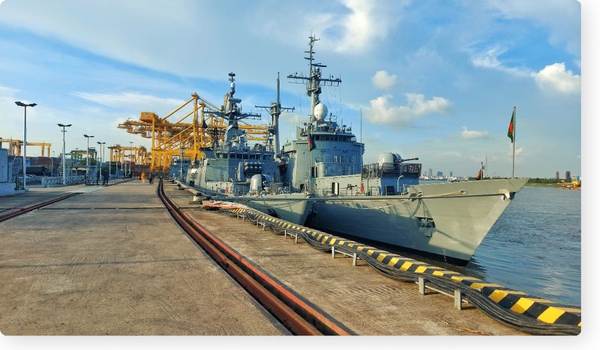

Proven Success in Global Port Security
Geospace security products are operation at ports across several regions, including Tanger in Morocco, Shenzhen in China, the Calais ferry terminal in France, Zeebrugge in Belgium, Vlissingen in the Netherlands, Malaga in Spain, Haydarpasa in Turkey and Igoumenitsa in Greece.
Effective Port Security Solutions
Our solutions are trusted in numerous applications across the globe, including:

vehicle screening
Geospace technology uses proven analytics to detect hidden compartments with concealed individuals. This simple, fast, and trusted technology is used in more 25 countries around the world for corrections security.

realtime monitoring
Whether embedded into our robust and ruggedized land and marine nodal products or offered independently, our wide offering of geophones are used in gathering data on the subsurface.

Layered protection
Geospace sensors are vital components of data gathering tools in applications for perimeter surveillance purposes. Our sensors are packaged into various solutions which tie into command and control, VMS, access control and other tools for comprehesive layered protection.
Articles, News & Insights

Vehicle Check Point Screening for Port Terminal Safety & Security
Detecting Concealed People in Container Trucks at Port Checkpoints Port security teams need to...

The Science Behind Heartbeat Detector®
Decades of Research, Testing, and Security Applications A person concealed inside a vehicle may be...
How to Choose the Right Contract Manufacturing Partner for High-Reliability Electronics
The Right Manufacturing Partner Does More Than Build Your Product For many OEMs, selecting a...
Frequently Asked Questions
How Do Port Terminal Security teams Detect Hidden People in Vehicles?
The Geospace Heartbeat Detector helps teams quickly and efficiently identify concealed individuals—supporting safer inspections at prison gates and informed decision-making in high-pressure environments. Using a lightweight, portable technology such as the Heartbeat Detector helps reduce the time each vehicle scan takes. Most scenarios the scan itself takes less than 60 seconds and identifies the seismic signal associated with the human heartbeat.
How long does a scan take to detect a hidden human inside a vehicle with Heartbeat Detector?
In most scenarios, the Heartbeat Detector scan takes less than 60 seconds once the sensors have been placed on the vehicle. Typically, a two-person operation completes a vehicle scan faster than a K9 search.
How Can Port Terminals Prevent Vehicle-Assisted Intrusion?
Errors can occur with traditional physical screening, especially when staff or K9 units are overburdened. By adding scanning technologies such as the Heartbeat Detector to support layered security at a port terminal, security teams help prevent escapes. Lengthy unloading of vehicles or manual searches are replaced by speedy technology with a proven 99% success rate.
What if a person is well-hidden and relaxed inside a vehicle?
Regardless of how well-hidden a person may be, their heart still beats. The technology used to identify the human heartbeat signal was developed by the U.S. Federal Laboratory in Oak Ridge, Tennessee. The Heartbeat Detector has found hidden humans in every part of a vehicle, including wrapped in bubble wrap, fabric, and cooling towels. This makes Heartbeat Detector one of the most reliable ways to prevent prison escapes.