

Sensors and Geophones

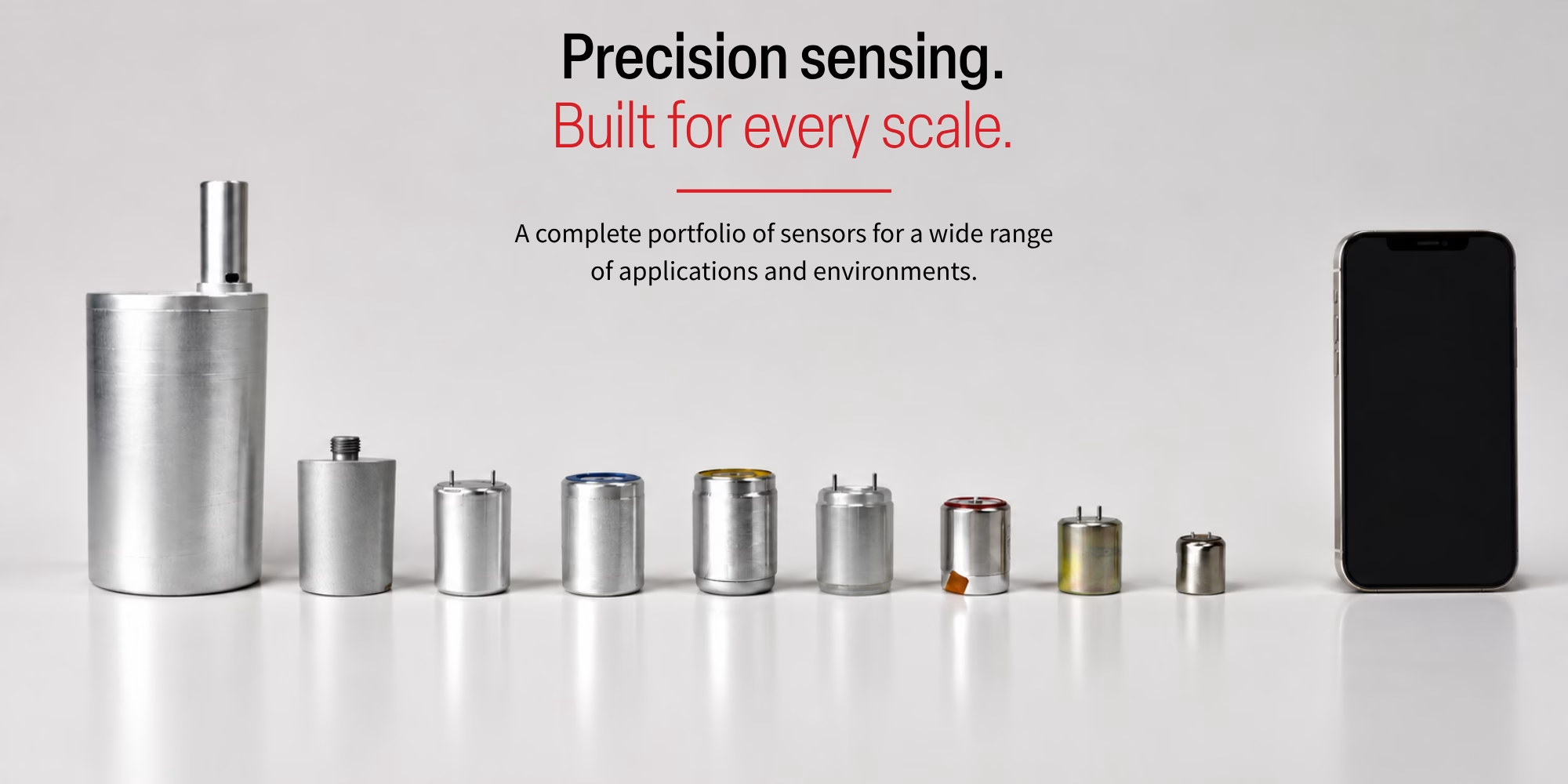
Geospace Technologies is the only domestic manufacturer of precision geophones, providing customers with a reliable U.S. source for high-performance seismic sensors. Backed by decades of engineering expertise, we design and manufacture sensors trusted worldwide for energy exploration, marine acquisition, industrial vibration monitoring, and geotechnical applications.
Our portfolio includes close-tolerance geophones, high-sensitivity geophones, hydrophones, industrial vibration sensors, and geotechnical seismometers across a broad range of frequencies and performance requirements. Each sensor is engineered to deliver the accuracy, consistency, and long-term reliability required in demanding operating environments.
Need help finding a specific sensor? Contact us today.
Geophone Comparison Chart
(V) vertical (H) horizontal (O) omni-directional
Product Line |
Frequency Range [HZ] |
Size [in.](D x H) |
Operating Orientation |
Common Applications |
|
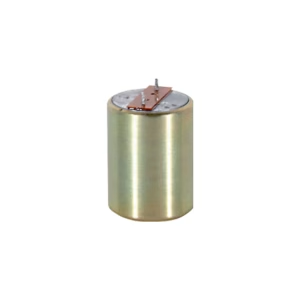
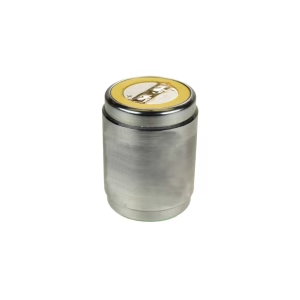
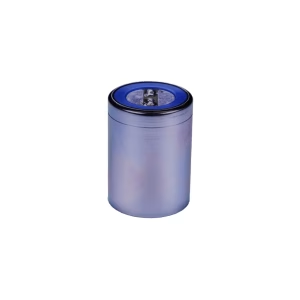
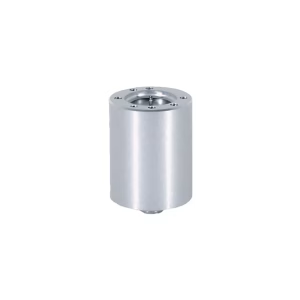
| GS-ONE | 4.5 – 15 | 1.2 x 1.6 | V / H / O | Seismic Exploration & Geophysics |  |
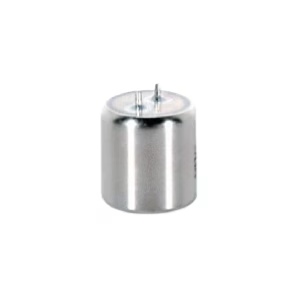
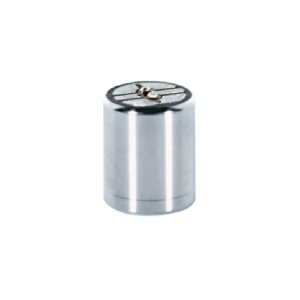
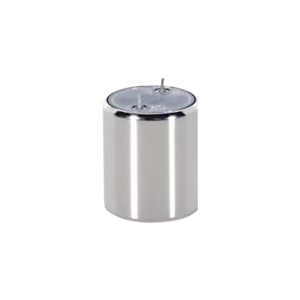
| GS-14 | 28 | .75 x .73 | V / O | Security & Motion Detection, Structural & Infrastructure Monitoring | |
| HS-1 | 4.5 – 15 | 1.62 x 2 | V / H / O | Seismic Exploration & Geophysics, Industrial & Machine Monitoring, Scientific & Specialized Research | |
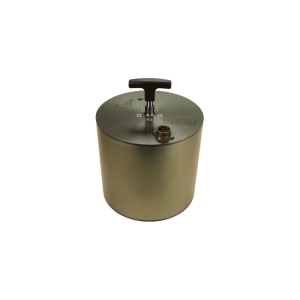
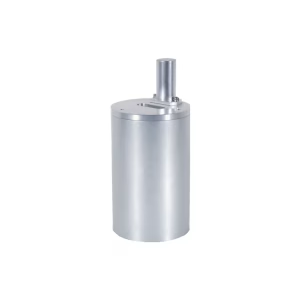
| GS-1 | 1 | 6.45 x 3 | V/ H | Structural & Infrastructure Monitoring, Scientific & Specialized Research | |
| 20DX | 10-18 | 1.0 x 1.3 | V / H | Seismic Exploration & Geophysics, Industrial & Machine Monitoring | |
| X-Phone | 15 | 1.12 x 1.55 | O | Seismic Exploration & Geophysics | |
| HSJ | 10-14 | .875 x 1.11 | V / H | Industrial & Machine Monitoring | |
| Omni 2400 | 15 | .875 x 1.035 | O | Microseismic & Downhole Monitoring | |
Applications
Seismic Exploration & Geophysics
Geospace geophones support seismic and geophysical applications across land, near-surface, marsh, and marine environments. Applications include seismic exploration, refraction and reflection surveys, MASW surveys, marine streamers, and other geophysical measurement systems.
Microseismic & Downhole Monitoring
Geospace sensors support microseismic monitoring and borehole applications where precise detection of subsurface activity is critical. Available solutions support traditional monitoring and specialized high-temperature downhole environments.
Structural & Infrastructure Monitoring
Geophones can detect vibration and movement in buildings, bridges, dams, construction sites, and other structures. Geospace sensors support structural health monitoring, blast monitoring, construction monitoring, and other applications requiring reliable vibration measurement.
Industrial & Machine Monitoring
Geospace velocity sensors can monitor vibration in machinery, vehicles, and industrial equipment. Applications range from automotive testing to machine condition monitoring and fault analysis.
Security & Motion Detection
Sensitive vibration detection can be used to identify footsteps and other movement transmitted through the ground or structures. Geospace geophones support security, intrusion detection, mining, and other motion-detection applications.
Scientific & Specialized Research
Geospace sensors support research and specialized measurement applications where conventional sensing solutions may not be suitable. Applications include geophysical research, cryogenic environments, high-temperature sensing, and other specialized vibration measurements.
Frequently Asked Questions
What is a geophone?
A geophone is a velocity sensor that detects ground motion or vibration and converts it into an electrical signal. Geophones are commonly used in seismic exploration, industrial monitoring, infrastructure monitoring, security, research, and other applications that require precise motion detection.
How does a geophone work?
A geophone uses a coil and magnet to convert mechanical movement into an electrical signal proportional to velocity. Because this process is self-generating, Geospace geophones can detect and measure motion without requiring external power.
What is the difference between a geophone and an accelerometer?
A geophone measures velocity, while an accelerometer measures acceleration. Geophones are also passive devices that do not require external power to generate a signal, making them well-suited for many remote and battery-powered systems. The best sensor depends on the application’s frequency range, sensitivity, power requirements, and operating environment.
Do geophones require power?
No. Geospace geophones are passive, self-generating sensors and do not require external power to produce a signal. This can help reduce overall system power requirements and extend battery life in remote monitoring applications.
How do I choose the right geophone?
Choosing the right geophone depends on several factors, including the frequency range being measured, sensitivity, orientation, environmental conditions, and recording equipment. Geospace offers a broad range of geophones and can help identify the appropriate sensor for your application.
What geophone frequency should I choose?
The listed frequency of a geophone refers to its natural frequency. In most applications, the frequencies being measured should be above the geophone’s natural frequency. Geospace offers sensors across a range of frequencies to support different vibration and seismic monitoring requirements.
Does geophone orientation matter?
Yes. Vertical and horizontal geophones should be installed in their specified operating orientation. Geospace also offers omnidirectional sensors designed to operate across a wider range of orientations when installation flexibility is required.
Can geophones operate in harsh environments?
Yes. Geophones are commonly deployed in demanding environments, but operating capabilities vary by sensor. Geospace offers ruggedized sensors for a range of environmental conditions, including models designed for extreme temperatures, shock, and field deployment.